

Dear reader: This article contains links to products and services that I may be compensated for, at no extra cost to you.
Shanghai has long been a bucket list destination for me. In the last couple decades, I’ve been to China multiple times (read about my visit to Taishan and Qufu) and even taught English there for a while. Somehow I had never made it to Shanghai, so it was time to change that!
In my travels, I usually find that three full days (four nights) is a good amount of time to get a taste of a big city, including one day trip. For Shanghai, this ended up being the perfect amount of time for me. (I would also spend three days in Lijiang next!)
Shanghai is enormous (it is the third largest city in the world, after all). I knew I wouldn’t see it all in three days, or even close to it. So, for this itinerary, I just focused on a handful of sights that stood out to me the most.
Below I’ll share exactly how I spent my three days in Shanghai. I will also sprinkle my article with practical tips, as there are quite a few things to know about visiting China (apps, SIMs, maps, taxis, etc).
Also read about why I chose a Holafly eSIM for China (or just order one here!) and my comparison of Holafly vs. Airalo eSIMs.
Table of Contents
How I Planned My Three Days in Shanghai

I’ll start by saying that Shanghai was probably the easiest part to plan of my recent China trip. There’s a decent amount of information online and guidebooks are relatively useful here, including my favorite, the brand-new 2025 Edition of Lonely Planet China.
For everywhere else I went in China, most information I found was horribly outdated or non-existent, because China changes so quickly and there hasn’t been much info published post-COVID.

After browsing the main attractions in Shanghai and making a shortlist of my must-sees, I knew I would need a full day to explore the city center spots on my list. These included Nanjing East Road, The Bund, Yu Garden, and Jing’an Temple.
On Day two, I would make a morning trip to Zhujiajiao, the most famous of the many “water towns” around Shanghai. In the afternoon, I would return to the city center to see a few more places that I didn’t make it to on Day 1, namely the French Concession, Tianzifang, and Xintiandi.

My third day would be reserved for a day trip to Hangzhou to see West Lake and Longjing Tea Village, where China’s most famous green tea is made (I wrote more in these articles about my day trip to Hangzhou and how to visit Longjing tea village).
Because I would arrive on a late flight to Shanghai, and I needed three full days for my itinerary, I didn’t count my arrival day. This means I actually booked four nights in Shanghai.
Where I Stayed in Shanghai

Like any other huge city, there are thousands of hotels in Shanghai. Even just narrowing it down to a certain area feels like a daunting task that requires a lot of research.
For my visit, I decided to stay at People’s Square. Here are some reasons why I chose it:
- Center of the city, both culturally and geographically
- Walking distance or direct MRT ride to most sights I planned to visit
- Only a few steps from Nanjing East Pedestrian Road (historic shopping street that leads to The Bund)
- Direct MRT connection to the airport I was flying into and out from (Hongqiao Airport) and Hongqiao Railway Station for my day trip
- Many excellent food options nearby
Once I narrowed it down to that area, I just browsed the hotel options and one of them instantly jumped out at me.

I chose to stay at Jin Jiang Pacific Hotel (see on Trip / Booking / Agoda), which is a heritage 1926 building directly facing People’s Park and Exit 8 of People’s Park MRT station.
This building harks back to the Roaring 20s in Shanghai, when the city was a bustling, international center of fashion and commerce. Yes, the hotel is now old, rooms are dated, and reviews aren’t the highest, but I loved it.
For me, this seemed like the perfect way to get a taste of this classic era of Shanghai history. The hotel would fit right in on the Bund, except there it would be five times the price.
The price of my room was shockingly reasonable. The room was spacious, bed was huge, and my bathtub even had golden faucets.
How to Book Hotels in China: I have long used Booking to book hotels in my travels, so I used it to book this hotel. However, as I continued booking other hotels for my China trip, I realized that the selection and prices are better on the Chinese site Trip.com, so I started to use that instead.
Trip has an awesome feature that allows you to filter reviews by room type. I also used Trip to book a few attractions and High Speed Rail tickets (we’ll get to that below). You can also switch any hotel’s entry to Chinese, which is useful for searching for the hotel on map apps (sometimes you can’t find it in English).
Arriving at Shanghai Airport
My flight from Taipei, Taiwan (where I used to live for 11 years) to Shanghai landed in the evening at Hongqiao Airport, the older of Shanghai’s two international airports.
The airport is west of the city center with access via two MRT lines: Line 2 Light Green and Line 10 Light Purple (see the MRT map here and here).
The airport has two stops on the MRT, Hongqiao T1 (purple line only) and Hongqiao T2 (green and purple lines).
I flew into T1 but People’s Square (my hotel) was on the green line. So I had to ride the Purple Line one stop to Hongqiao T2, where I transferred to the Green Line to get to my hotel.
Flying into Pudong Airport: If you fly into Shanghai’s newer Pudong International Airport, which is southeast of the city center, you’ll get to ride the Shanghai Maglev (the world’s fastest train, but ticket on Klook / Trip) to Longyang Road station, from where you can connect to multiple lines, including the Light Green Line to People’s Square.
Entering the airport’s MRT station, this would be my first time trying one of my Chinese payment apps (WeChat or Alipay). I had registered an account on both of these before I left home.
I tried Alipay first. I opened the app, and it asked me to click through a few more set-up steps now that I was physically in China. Then, on the home page, I set my city to Shanghai at the top-left and clicked the Transport button.
Again, it asked me to click through some steps to set up my Transportation card for Shanghai (I would have to do this again for every city).
Once finished, it produced my Transport QR code. I swiped this on the scanner to enter the station, and voila, it worked!
Once I arrived at People’s Square, I would have to scan it again to leave the station, and the funds (a mere 3 RMB or 0.4 USD for a half-hour ride) were automatically billed to my credit card.
Note: you have to put your bag/luggage through a security scanner every time you enter an MRT station.
My First Night in Shanghai

I arrived in Shanghai fairly late and planned to just crash at my hotel. However, the excitement of being in a new place was too strong, so I dumped my luggage in my room and went out for a walk.
Big cities in China are known for their many lights, and Shanghai is the king of big cities.
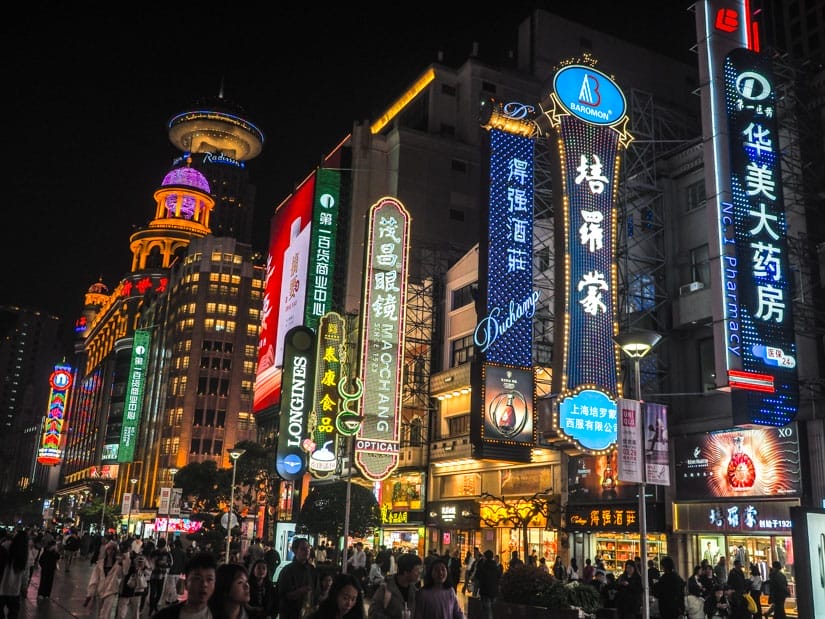
As I explored the streets around my hotel, my head was constantly turned upwards, staring at neon signs, lit up billboards, and entire buildings covered in changing lights. It was truly a feast for the eyes.
I made my way over to Nanjing East Road, the city’s historic pedestrian shopping street, which I’d be better exploring the next day. It was absolutely packed with people. Knowing I’d visit again several times in the coming days, I just did a quick walk up and back down it.


I popped into a corner store to check out the snack and beer selection, settling on a Tiger beer infused with soju (not Chinese, but whatever).
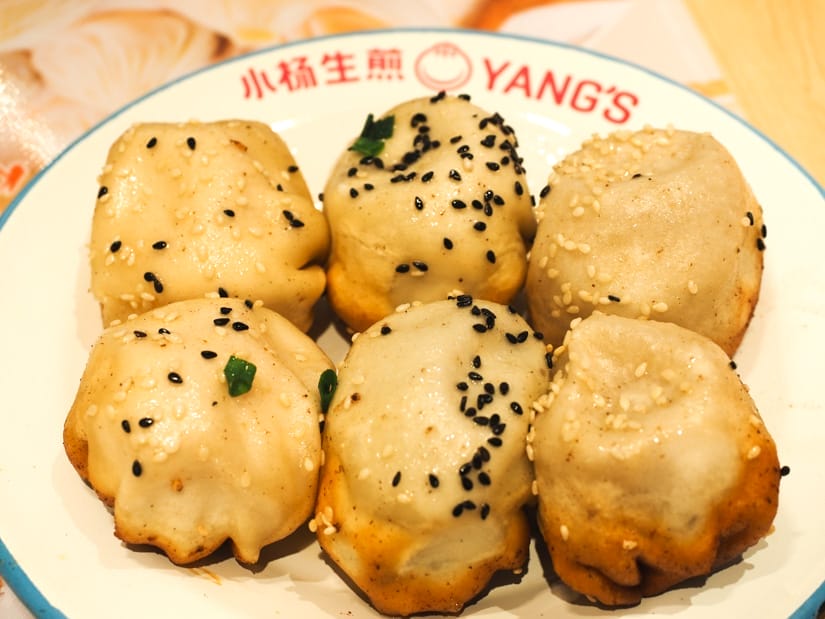
I also checked off one of my must-eats right away – Yang’s Dumpling (小杨生煎(黄河路店, here), just a few blocks from my hotel.
The specialty here is pan-fried buns (sheng jian bao), and these were literally the best ones I’ve ever had. They were so crispy on the outside and super hot and juicy inside. My order of six came with three different kinds.
I could have wandered for hours, but I cut the night short to get a good sleep for the big days to come.
Day One: Exploring Central Shanghai
Today I would devote to exploring multiple attractions in the city center of Shanghai, also called Huangpu district (黄浦区), which lies to the west of the Huangpu River.
Because some places here take on a totally different vibe at night, I would visit a few of them twice in the same day.
Breakfast
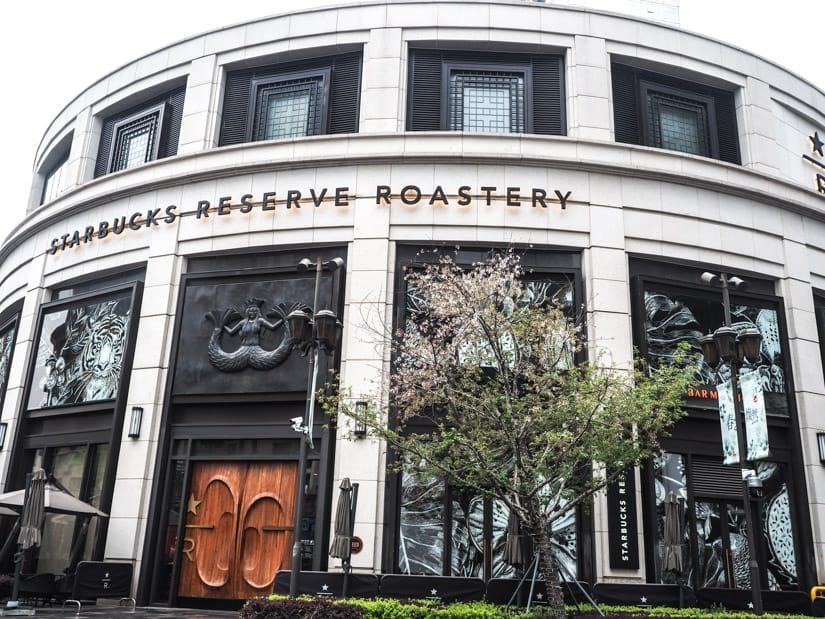
I woke up quite early so I decided to ride the MRT one stop west to Nanjing West Road station to visit the 2nd largest Starbucks in the world (here). GoogleMaps’ times were wrong, though (as is often the case in China), and it wasn’t open yet.
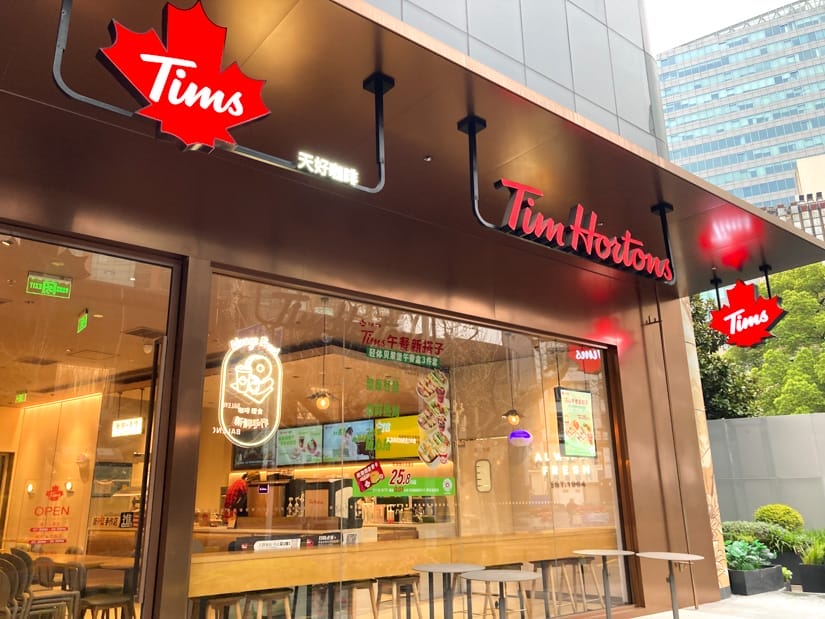
Instead, I got a coffee at Tim Hortons (the most famous donut & coffee shop from my country), for about three times the price I’d pay back home.
Then I walked through People’s Park, where I stumbled upon a Marriage Market. This is where parents display profiles of their adult children they are hoping to find marriage partners for, with all of their requirements listed.
The market takes place on weekends on the north side of the park.

After traversing the enormous park, I continued onwards to the breakfast shop I’d carefully selected, one of the most famous xiaolongbao (小笼包 or soup dumpling) restaurants in the city.
Lailai Snack Dumpling (莱莱小吃汤包馆) is a Michelin Bib Gourmand xiaolongbao restaurant famous for their crab roe xiaolongbao (蟹粉鮮肉小籠包). The restaurant is here, just north of Nanjing East Road, and a short walk from my hotel.

I knew the restaurant was famous, but I didn’t expect to find SUCH a long line. The line went down the street in one direction, and back in the other direction on the other side, with staff on hand to manage the flow of people. Everyone in line was Asian except me, but most were not Chinese (Asian travelers are the most serious foodies!)
It took about 45 minutes to get in, but it was worth the wait. The xiaolongbao were incredible.

I was a little disappointed that they didn’t have the huge xiaolongbao that come with a straw to drink the soup – something Shanghai is famous for but I’ve never seen in Taiwan (which is also known for its xiaolongbao).
So, I did something I’m not ashamed to admit – after I finished my meal, I went next door to ANOTHER xiaolongbao shop (with only locals inside and no line!) to order one of those. Honestly, it wasn’t as good – it’s all about the novelty of it – but I couldn’t NOT try one.

Nanjing East Road and The Bund

Fully stuffed, it was now time to explore the city’s two most famous streets. I walked the full length of Nanjing East Road (南京東路), which now had a totally different atmosphere than the night before, with far fewer people.
Nanjing East Road has been the city’s most famous shopping street for over 100 years. Right at the entrance, I spotted Shanghai No. 1 Department Store (上海市第一百货商店, here), which dates to 1936 and used to be the largest in Asia.
A little further in, I took a peek inside Shanghai No. 1 Food Store (上海市第一食品商店, here), a decades-running food and packaged snack store, and Shanghai No. 1 Dispensary (上海市第一医药商店, here) for Chinese medicines and herbs.
Besides these historic brands, the street is now mostly lined with modern department stores and major Chinese and international brands like Apple, Huawei, Omega, Uniqlo, and so on.
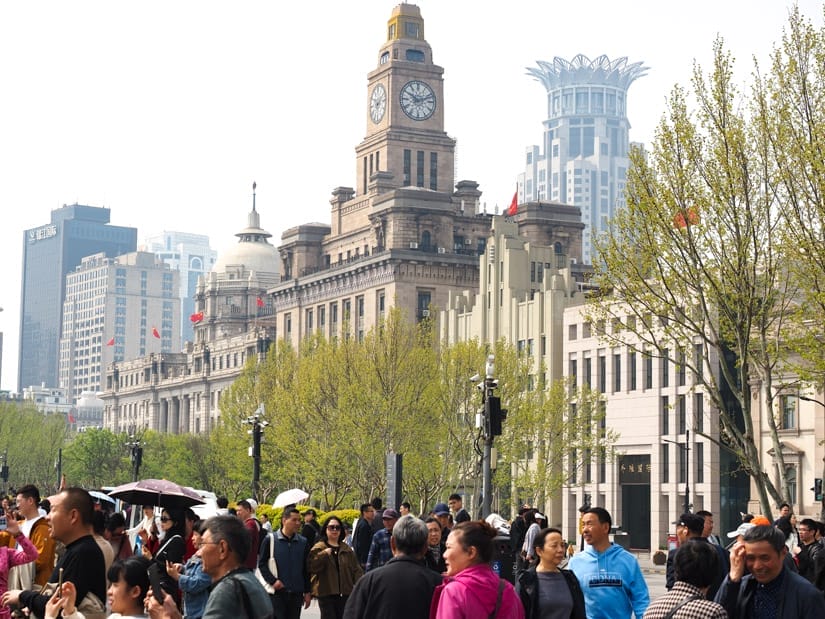
It took me about 30 minutes to walk the full length (1.5 kilometers) of Nanjing East Road. As I approached The Bund (the second famous road, which is lined with historic buildings facing Huangpu River), the crowds got thicker and architecture became more historic.


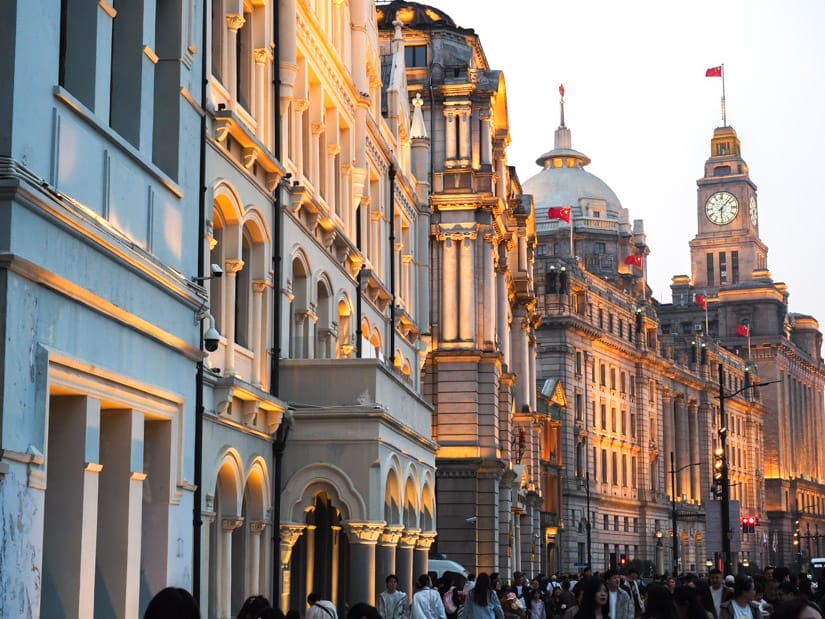
Fairmont Peace Hotel (和平饭店), one of the most famous of the 52 historic buildings on The Bund, lined the north side of the road just before it intersected with The Bund.

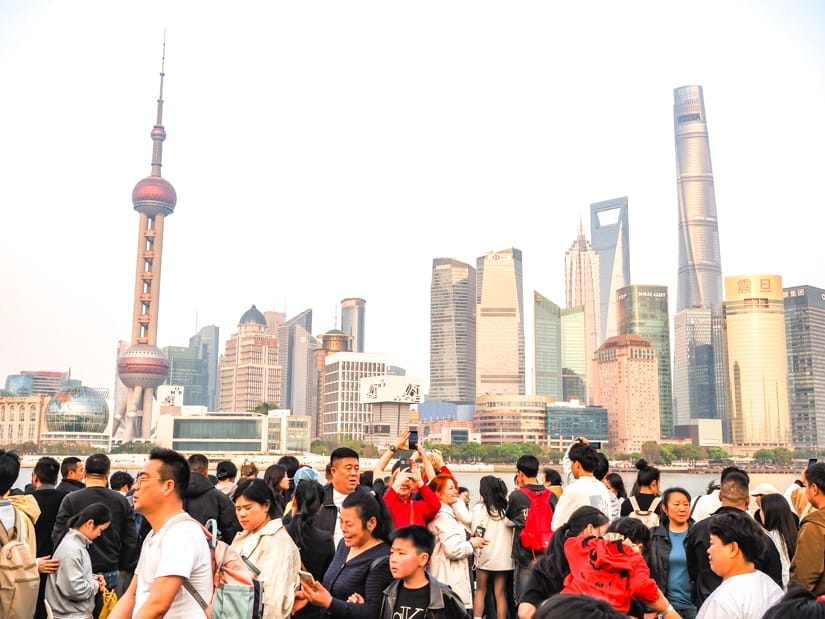
When I reached The Bund (外滩 or waitan), I crossed the road to see the city’s most famous view, looking across Huangpu River at collection of skyscrapers in Pudong. These include the iconic Oriental Pearl TV Tower and Shanghai Tower, the country’s tallest building.
And yes, this was a clear day…That’s smog, not clouds.

There were tons of people here, but I was still able to get a spot along the railing to take a selfie. When I would return here later in the day, it would be so packed that I wouldn’t be able to do this again.
From there, I made my way down the full length of The Bund, promising to return after dark for what I knew would be an even better view. I used an illustration I’d saved from the DK Eyewitness China Guide to identify the buildings as I walked.
Yuyuan Garden and Shanghai Old Street
For my next major stop, Yuyuan Garden, I could have walked back to Nanjing East Road MRT, but it would take a similar amount of time to just walk all the way there.
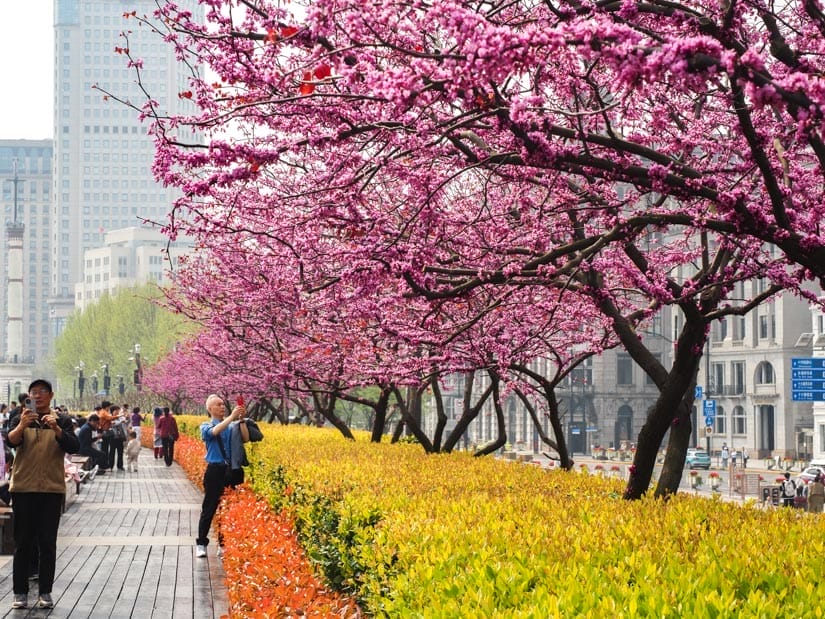
From southern end of The Bund, I walked through the large Gucheng (Ancient City) Park (古城公园), where I got some lovely shots of locals relaxing among the greenery and flowers.


Yu Garden (豫园 or “Yuyuan”, buy ticket on Trip) is another unmissable attraction in Shanghai. This is one of the country’s most famous traditional gardens and dates to the Ming Dynasty (1579).
The garden is at the core of a collection of really cool, historic-looking buildings and shops. I arrived at the northeastern corner of the garden. I joined the long but quickly-moving line at the northern entrance and scanned my QR code from Trip to enter.


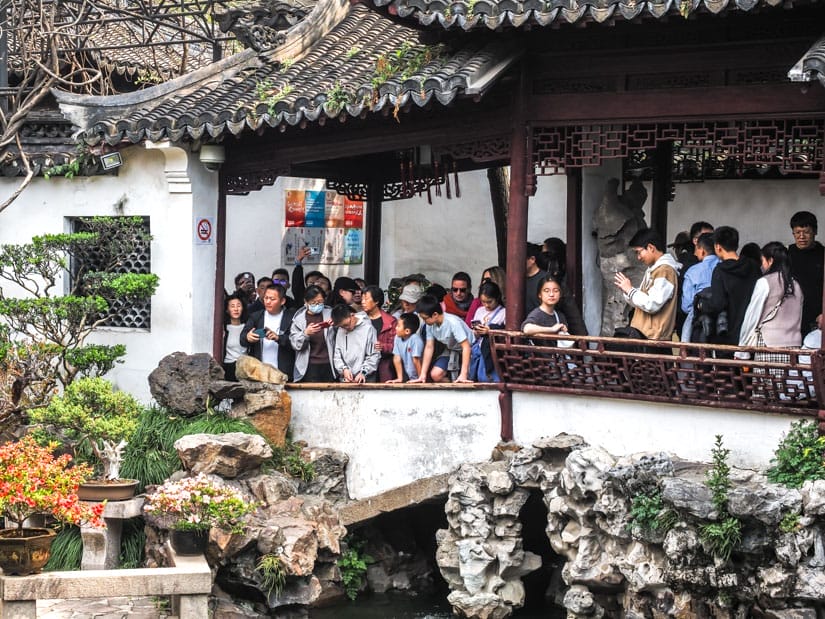
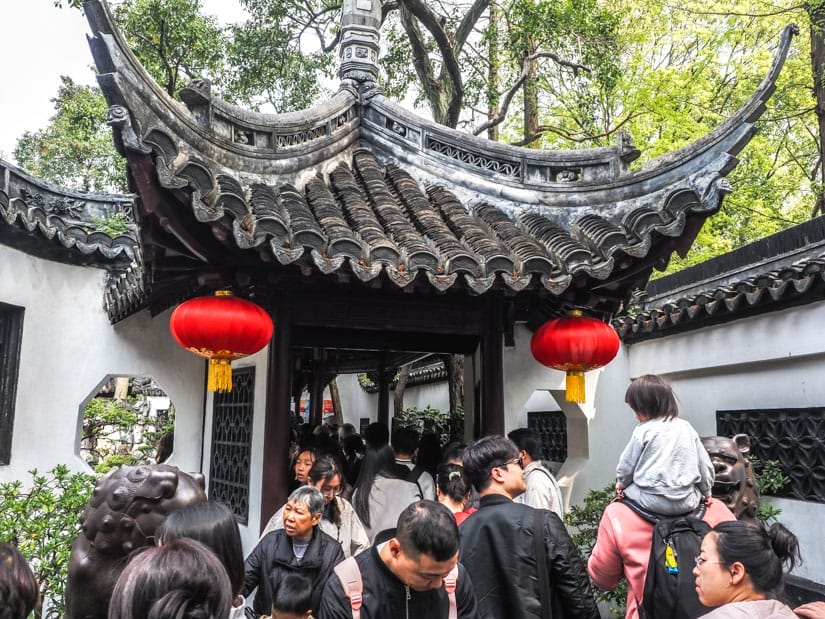
Inside the garden, I quickly realized it was totally impossible to find the way or know what room or area of the garden I was in. It was absolutely packed with people.
I just went with the flow of people through the many rooms and areas of the gardens. It was beautiful, and I felt like joining this mass of people was part of the experience, too – in a good way! I’m very used to crowds, though, so this wouldn’t be for everyone.

At some point, I exited the garden and found myself at the famous pond, with Huxinting (湖心亭, Mid Lake Pavilion Tea House) in the middle of it.
Jiuqu Bridge (九曲桥 or “Nine Turns Bridge) zig-zags across the pond and was completely packed with people. At the time of my visit, there were beautiful flower lanterns on the pond, which I knew would look way cooler when lit up at night – another spot I’d have to return to.


The lanes around the pond, also called Yuyuan Old Street (豫园老街), are lined with stunning traditional architecture. One lane had a canopy of butterfly and flower lanterns above – it was stunning in the daytime but would be even better in the dark.

South of the pond, these lanes lead to Shanghai City God Temple (上海城隍庙 or “Shanghai Chenghuang Temple).
This one has paid entry on the spot. I had some trouble scanning the QR code at the gate to pay, only to realize that the QR code I was scanning works for WeChat only, but I was trying to scan it with AliPay.
It turned out that the AliPay code was further inside. Usually the two codes are right next to each other and you just scan the one you’re trying to pay with.
Alipay vs WeChat: Even though I set up both apps before my trip, my WeChat app didn’t work once I was in China. I tried so many times and ways to complete the registration, but it just wouldn’t work (a week and half later, I would figure out it was because I hadn’t filled out every item in the personal profile).
Therefore, I used AliPay to pay for almost everything on my entire trip. It worked every time and I never once got or needed cash. I only had one situation on the whole trip where a driver only had WeChat, not Alipay, but my WeChat worked by then.
It’s worth learning how to say WeChat (微信 or wei xin) and AliPay (支付宝 or zhi fu bao). When paying by scanning THEIR QR code, say which one you want to use. Scan the correct QR code, enter the amount to pay, select which credit card (if you added more than one), then submit the payment. Usually you show them the screen to prove it went through, but some places hear a beeping noise on their end when it does.
In cases where they want to scan YOUR QR code, which is another way to pay – then you can just show them your QR payment code in either app and it’s done. For this way, you don’t need to enter the amount.
WeChat QR codes have a green logo on them, while Alipay has blue.
Most major cities have a City God Temple, which is throught to protect the city. In Taiwan, where I lived for over a decade, every city and many smaller towns have one.
I found the one in Shanghai to be your pretty typical Chinese temple, with multiple rooms and shrines inside and lots of tourists, but it didn’t stand out to me in any major way.

Next, I exited the maze of traditional lanes to find Shanghai Old Street (上海老街), which runs along the southern border of the complex. Though not quite as impressive as the lanes inside, it still had some cool architecture.
There were lots of food stalls here, so I decided to have an impromptu lunch, including a long stick of barbecued muton and a green onion cake.


Jing’an Temple

At this point, I have to admit I was pooped. Any sane person would have gone back to the hotel for a rest. Instead, I decided to ride the MRT to Jing’an Temple (静安寺), probably the most famous temple in the city.
I knew this before going, but this temple is very touristy. Jing’an neighborhood around it is super modern, fashionable, and known for having lots of expats.
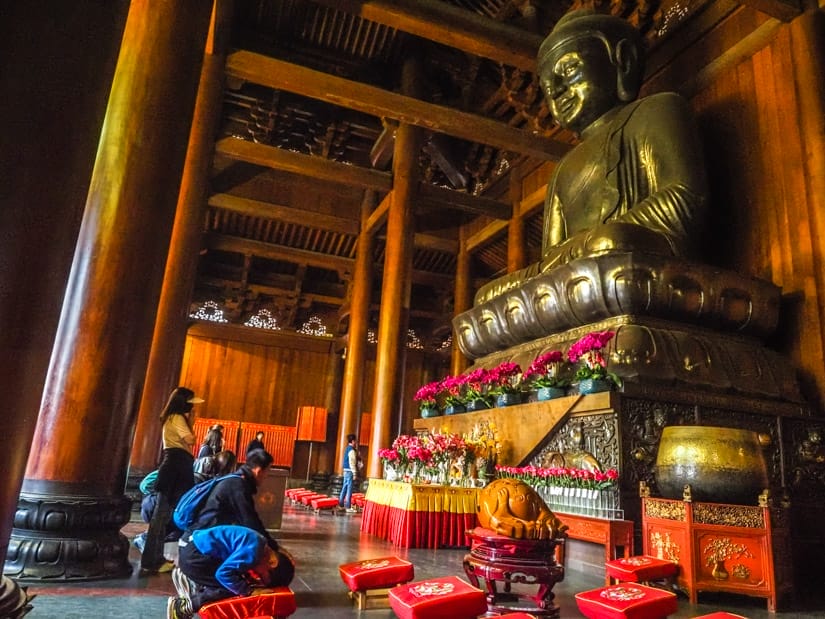
The temple itself, which is surrounded by these modern buildings, is very old. But after being rebuilt, the current structure is actually very new. It gave me rich Buddhist vibes and has a steep entrance fee of 50 RMB. This time I was smart enough to ask for the Zhifubao (Alipay) app and they showed me the correct code to scan.
The temple is, nevertheless quite beautiful. It has some beautiful wooden architecture, golden stupas, a large Buddha in the main hall, and a jade Buddha in another room.
At the center, visitors try to throw coins into a towering structure – these were the one and only time I saw any physical money on this China trip.

The Bund and Yuyuan Garden at Night
After Jing’an Temple, I once again skipped another chance to take a break at my hotel (I would be passing right by it) and instead returned to Nanjing East Road by MRT.
I walked part of road again to reach The Bund (Nanjing East MRT is not quite at the end of it), which in the late afternoon was absolutely packed with people – it’s hard to describe with words how busy it was, but the photos should help!

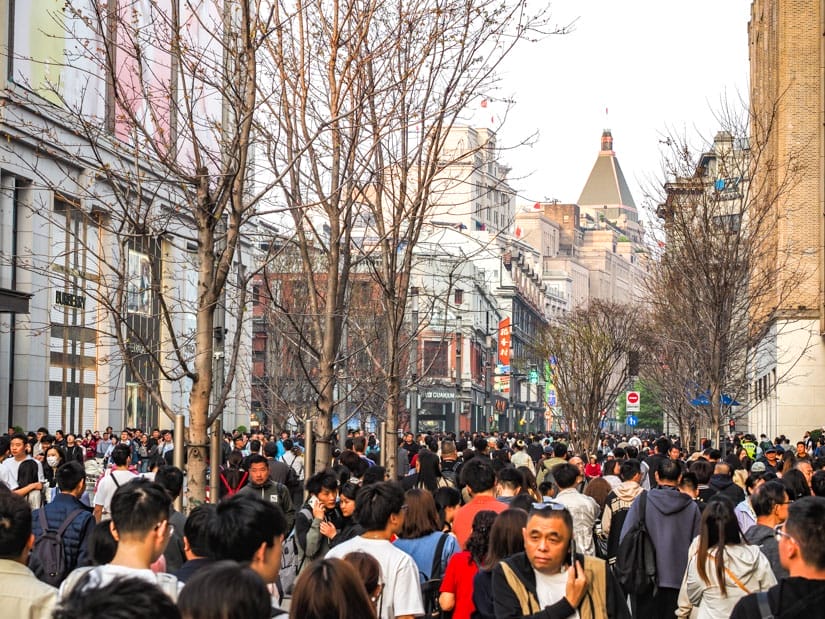


This time, when I reached the Bund, it was physically impossible to get close to the railing for taking a selfie, even though the railing was many blocks long.
My first goal here was to catch Happy Hour at one of The Bund’s most iconic bars: The Long Bar in Waldorf Astoria Hotel. I love frequenting upscale bars at hotels that I’m not actually staying at – feeling fancy, without the huge cost!
This neoclassical hotel bar features, as the name suggest, a very long (34-meter) bar, which is made of mahogany. At this early hour, the bar was almost empty, so I took a seat at the long bar and perused the cocktail menu, which came in a wooden box full of drink recipe cards.

I ordered an Astoria Cocktail, which has gin, vermouth, bitters, a touch of saline, and came with a dish decoration on top. It was NOT cheap, but I was paying for the overall experience.
My drink came with my choice of three snacks from a rolling cart that appeared after I ordered it.

For my second drink on The Bund, I wanted somewhere with the famous Pudong view. My research had informed me that the best possible view could be had at Sir Elly’s Bar on the roof of the Peninsula Hotel.
Arriving at the hotel, and treated like royalty, I was directed by the staff inside to the elevator to the top.

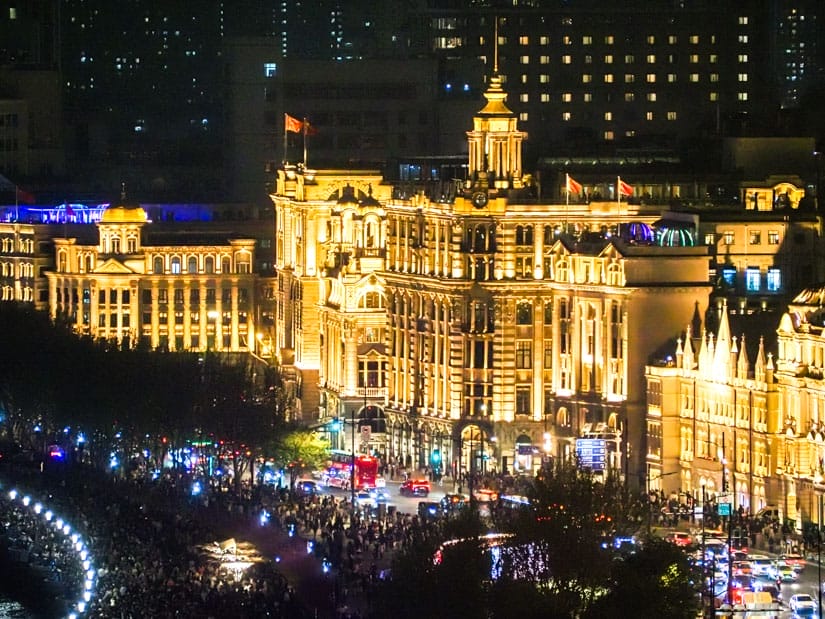
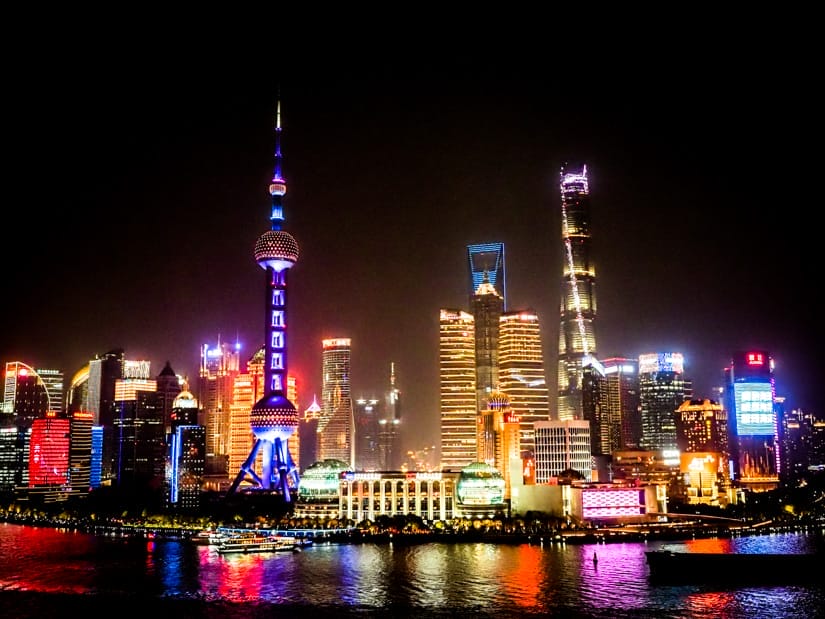
Stepping outside, I was blown away by the view. Not only is the rooftop bar directly opposite the famous cluster of skyscrapers in Pudong, but also, because it’s at the far northern end of The Bund, I could also see down the whole length of The Bund. The best view of both sides!
It was just after dark, so I even managed to score a table right at the edge. My cocktails here (again, not cheap, but strong and worth the view) again came with more snacks than I could finish. I wouldn’t need to have dinner until much later.


With more than just a buzz, I made my way to the MRT, passing some more incredible scenes on the way, like this one:

I then returned for my second visit to Yuyuan Garden. It had been pretty in the daytime, but in the dark it was literally jaw dropping.
This was one of the most atmospheric places I’ve ever been. Yes, it was swamped with people (like almost everywhere I’d been that day), but I barely noticed because every direction I looked was just mesmerizing.
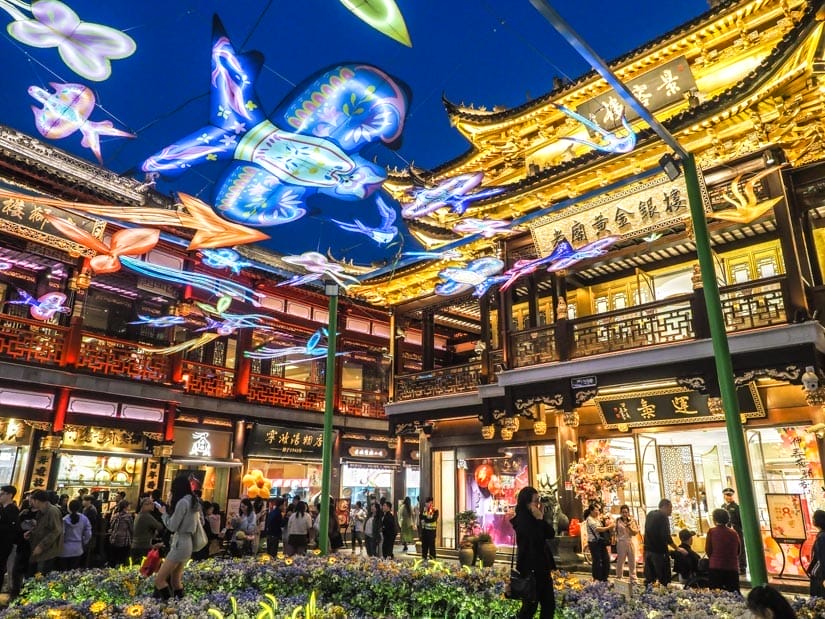

At the pond with the zig-zag bridge, just as I had guessed earlier in the day, the flower lanterns were now lit and looked gorgeous, enshrouded with mist that was lit up with blue lights.

Last but not least, that lane with the canopy of butterfly lanterns – it was unimaginably beautiful at night.


Returning to my hotel area, it was time for a late dinner. Earlier I had taken note of a crab roe rice and tofu pudding restaurant just off Nanjing East Road that looked delicious, so I had to give it a try.
Here I learned the third way to pay with China’s payment apps. In many restaurants, you start by scanning the QR code on the table. It opens their menu, where you select items, pay for them, then they come to your table.

Day 2: Zhujiajiao and More in Shanghai
My day two also happened to be the last day of a long weekend in China. To beat the crowds, I took an early MRT to Zhujiajiao. It took a full hour to get there, with a transfer at Hongqiao Railway Station (one station past the airport, where I had arrived).
Thanks to my early start, I was able to return to Shanghai by mid-afternoon and check off a few more sights in the city.
Zhujiajiao Water Town

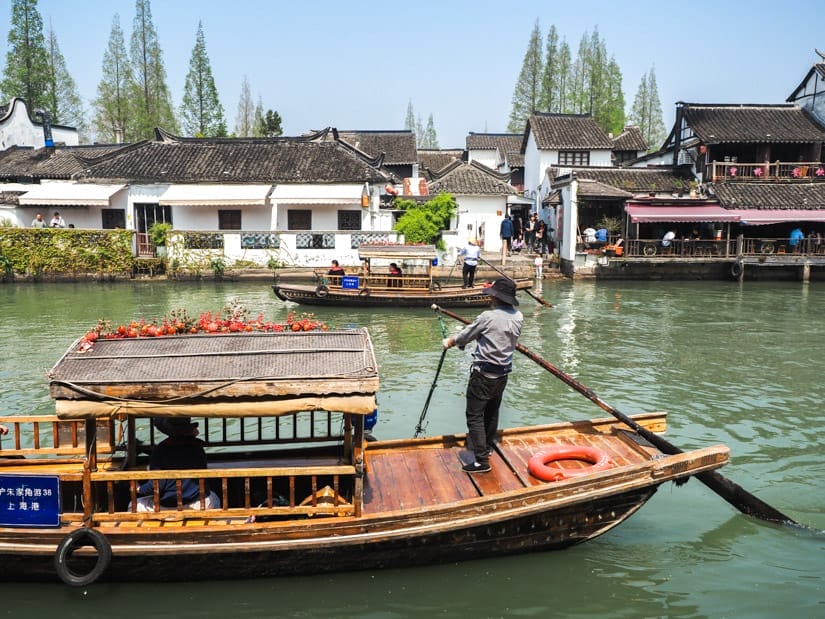
Zhujiajiao (朱家角古镇) is the most famous of the several “water towns” within easy half- or full-day trip distance from the center of Shanghai. These are ancient towns built around networks of gorgeous canals.
Yes, Zhujiajiao is the most touristy one, but I’m often a sucker for touristy sights. I find that usually they are famous for a reason, and I personally don’t mind crowds.
It’s about a half-hour walk from Zhujiajiao MRT station to the official entrance of the water town at its northwestern corner.

From the MRT, I took exit 1 and walked north along Zhuxi Road (珠溪路) to Xiangningbang road (祥凝浜路), where I turned right and bought some fruit from a local market for breakfast.
I then then turned left and walked north up Caoping Rd (漕平路), crossed a pedestrian bridge over a river, and kept going until I reached the official Visitor’s Center and entrance.
I paid 80 RMB for an entrance ticket to the water town that included five attractions (two gardens, an art gallery, and two temples). There was also a ticket for 60 with only three spots (no temples), but I recommend the former, because those two temples are worth visiting.
From the entrance, I followed the main route through the water town, essentially walking south back towards the MRT.

The first stops were Kezhi Garden (课植园) and Garden of Inseparable Hearts (和心园), both included on my pass. These serene gardens were large, stunning, and had very few people.
From there, I crossed a very cute little bridge to an narrow lane where I visited Apo Teahouse (阿婆茶楼, just for a quick look, not to have tea). Then I sampled some local specialties, including a rice dumpling (粽子) and an extremely soft piece of pork wrapped in a leaf.


Then I crossed the most famous bridge in Zhujiajiao, Fangsheng Bridge (放生橋) to the southern and larger part of the old town. The bridge was so busy that guards were there to remind people to move along and not fall into the river.
At the end of the bridge and to the right is the start of North Main Road (北大街), the main street of the old town.
The street is lined with shops selling tempting snacks, traditional souvenirs, and the like – it’s all very impressive at first, but after a while, you start seeing lots of repeats (and I would find this again with other old towns on my trip).

One stop I really wanted to make was at Jiangnan First Teahouse (江南第一茶楼), supposedly the first teahouse in town. There I ordered Longjing tea, which seemed pricey until I realized it came with an enormous set of snacks – way more than I could possibly finish.
The view from my table in the teahouse looking out at the canal was unbeatable, and 100% worth the price of the tea-slash-meal.

Down the road, I also visited Helong Art Gallery (上海市鹤龙美术馆), which was nothing special but included on my ticket. I also took a peek inside Handalong Jiangyuan (函大隆醬園), a famous ancient shop specializing in traditional sauces and pickled items.

Next, I veered off the main road to cross the very cool, covered Lang Bridge (廊桥) to reach Yuanjin Buddhist Temple (圆津禅院), also included on my ticket.
The reason I do recommend getting the more expensive ticket is because this temple is quite beautiful and offers an awesome view from the second floor looking down on the canals.


Next, I visited the other temple included on my ticket, the City God Temple, which was a short walk from there (城隍庙).
From there, I continued along the road in front of the temple (西湖街) which followed a canal towards the exit.
As I followed this canal, I passed under the pedestrian bridge that I had first taken when walking from the MRT to the water town. I kept going into a neighborhood that felt more like a real water town, with real houses of locals living along the canal.

The road finally brought me back to Zhuxi Road (珠溪路) right about here, where I turned left, and it was a straight shot back to the MRT.
Leaving the water town from here, I realized that if I had entered here, I could have entered the town for free. But then I would have had to pay to enter each attraction, so the price would have ended up being the same or even more.
In total, I spend 5 hours at the water town, which included my leisurely lunch. If you moved quickly, you could probably do it in 3 hours.
French Concession, Tianzifang, and Xintiandi

Returning to central Shanghai, I still have a few more hours to explore the city. My first stop was the French Concession, supposedly one of the prettiest neighborhoods in the city.
I took the MRT to Shanghai Library (exit 3), from where I walked Hunan Road to find Wukang Road (武康路), the best-known road in the neighborhood.

Walking down this road felt like being transported to Paris, with cafés, bakeries, beautiful trees, and loads of tourists.
At the end of it, I reached Wukang Mansion (武康庭 or Normandie Apartments), an incredibly famous triangular or “wedge-shaped” building dating to 1924.

At the intersection which the building’s “edge” points to, all four sides had masses of tourists, all there to photograph the building. I saw multiple police stationed at every corner to make sure the tourists didn’t get hit by cars while taking their selfies.

Next, I hopped back on the MRT and rode to Dapuqiao for visiting Tianzifang (田子坊) a dense neighborhood of old shikumen (石庫門, traditional Shanghai residences with stone gate and courtyard, converted into hip shopping and dining district.
This neghtboorhood had a bohemian vibe and was really cool. If I could go back, I would have stayed longer here, had a drink, and skipped the next stop.


From there, I walked to Xintiandi (新天地), which I expected to be very similar to Tianzifang, but it was not nearly as cool. Instead, when I arrived, my map led me to a department store called Xintiandi Style.
It took me some time to figure out that the Xintiandi shikumen area was north of the department store. But even when I got to the right spot, it just wasn’t as cool as Tianzifang. It felt more rebuilt and gentrified.

There was one nice street of restaurants and bars that feels very European, with many large patios full of people and trees providing shade. While I was looking for a spot to have a drink, the vibe here just wasn’t what I was looking for, so I quickly moved on.

I pressed on to my final stop of the day, dinner. I forget where, but somewhere in my research I came across Weixiangzhai (味香斋), a small and very local sesame paste noodle restaurant that looked very yummy to me.
On the walk there, I was really feeling the neighborhood – a hip, younger neighborhood that was totally devoid of tourists. And that’s where I find my ideal happy hour spot. I found two different little craft beer bars and tried them both.
After dinner, which was as delicious as I had hoped for, I was totally exhausted, so I headed back to the hotel to get a good night’s sleep before another early tomorrow.


Day 3: Day Trip to Hangzhou and Longjing
For my final full day in Shanghai, I planned to do a full-day trip to Hangzhou for seeing West Lake and to buy some of China’s most famous green tea in Longjing Tea Village.
See these articles for more details about my day trip to Hangzhou and visiting Longjing Tea Village than I’ll describe below.
Getting to Hangzhou

The easiest and fastest way to travel from Shanghai to Hangzhou is by HSR (High Speed Rail). There are many per day, but they can still sell out.
HSR tickets are released two weeks in advance, but I found that I could book them even earlier here on Trip.com. Then, when the tickets are actually released, Trip would secure my seats for me. Trip is a Chinese app, so it’s also great for booking hotels and attractions in China.
My ride from Shanghai Hongqiao station (one MRT stop past Hongqiao Airport) to Hangzhou East station took about one hour. To enjoy a full day in Hangzhou, I departed at 7 AM.
Upon arrival at Hangzhou East, I transferred to the Hangzhou MRT (I had to change my Alipay from Shanghai to Hangzhou to get a transportation QR code for the city) and rode it to Fengqi Road MRT station (凤起路站).
From there, it was a 15-minute walk to the northwestern corner of West Lake.
West Lake

West Lake (西湖) is one of the most famous lakes in China and a UNESCO World Heritage Site. The lake is surrounded by ancient temples, shrines, pavilions, and gardens. These gardens have inspired many others in China and beyond.
The lake is quite large, so I only planned to explore one side of it, the north side, which seemed to have the most to see.

It took me just under two hours to walk along the north shore of the lake. This included walking along the Bai Causeway to Gushan Island.
Visiting at the beginning of April, I was super lucky to find that the entire length of the causeway was lined with gorgeous cherry blossoms in full bloom. It was also packed with visitors, especially elderly Chinese visitors.
Coming from a country with extremely beautiful lakes, I didn’t have super high expectations for West Lake, but it did exceed my expectations.
National China Tea Museum and Longjing Tea Village
The better part of my day in Hangzhou was devoted to exploring Longjing, a tea-growing region in the hills directly west of West Lake.
Longjing has been China’s most famous green tea ever since a Qing-dynasty emperor visited and gave it imperial status.
I have been a bit of a tea geek for years, but I’m mainly familiar with oolong teas in Taiwan. I was therefore very keen to visit Longjing and see what green tea is all about.

When I reached the northwestern corner of West Lake, I hopped in a Didi to Green Tea Restaurant (绿茶餐厅, here) for an early lunch.
Didi is China’s version of Uber and works almost exactly the same way. You can use the Didi app, but I just used the Didi feature in my Alipay app – it’s right on the home page. It’s super easy and the funds are automatically charged to your credit card. The rides are also silly cheap compared to Ubers in my country.
The restaurant is a short walk from the National China Tea Museum (my next stop) and I had seen it recommended in tea-focused groups on Facebook. This ended up being the best meal of my trip!
The restaurant is set on a small pond right next to tea plantations managed by the museum. It has the feeling of a floating restaurant – some of the dining rooms are even on boats.
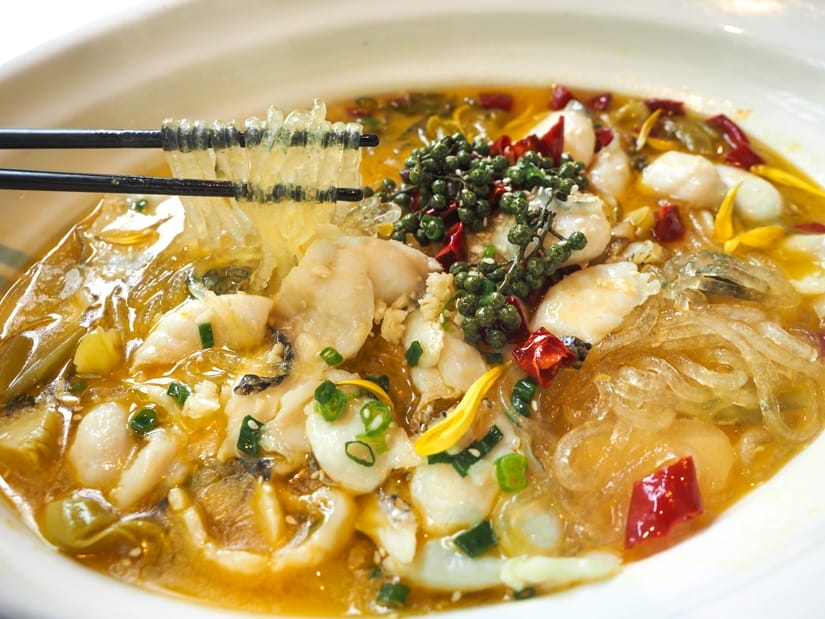
My meal of steamed fish in a golden soup with pickled cabbage, local greens, apple-shaped steamed buns, and Longjing tea was nothing short of fantastic.
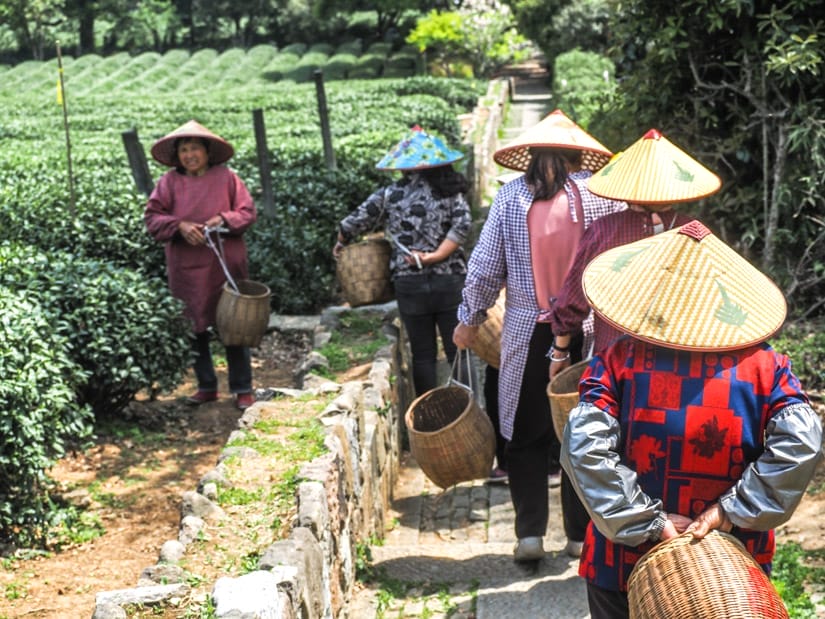
After lunch, I walked over to China National Tea Museum (中国茶叶博物馆, here, see official site). On the way, I passed by several fields where workers were harvesting green tea leaves.

Entrance to the museum is free. Exhibits in several buildings cover the history of tea, types of tea, tea drinking culture, different products made from tea, and more. The sprawling museum grounds also features tea plantations, walking trails, and a small stream in the woods.

Next, I returned to the main road near the restaurant and hopped in a taxi that was just sitting there to Longjing Tea Village (note: I could have taken a local bus from the lake to here and to Longjing, but the taxis were so cheap that I didn’t bother).
I asked the driver to take me to Longjing Temple (龙井寺, here), which is just a few minutes before Longjing Tea Village.
This serene temple in the woods is a place where tea is revered. It also contains one of several spring-fed wells in the region (Longjing literally means “Dragon Well”).

After the temple, I walked the rest of the way to Longjing. I took a small detour to visit a second branch of China National Tea Museum (here), which I’d perhaps skip unless you are very interested.
When I first entered Longjing Tea Village (here), I saw (and smelled) tealeaves being roasted in large pans in front of teashops, but I still couldn’t see the tea fields.
Then I rounded a corner into the actual village, and bam – I found myself in a large, stunning valley with tea plantations climbing up the valley walls all around me.

I took a random set of stairs and climbed up one of those plantations. The trail kept going up and up, and the views got better and better.
My next goal was to actually drink and purchase some tealeaves. I eventually did at this shop, which I chose because I noticed many locals were buying tea there.
To purchase China’s most famous tea in the place it was actually grown and roasted was one of my main reasons for coming on this trip to China, so this was very exciting for me!

Next, I had one more stop before leaving the area, which was Laolongjing Yuchayuan (老龙井御茶园), also called Shibake Yucha (十八棵御茶, here). This is an attraction at the very end of the village where the emperor supposedly tasted Longjing tea.
Today it has a collection of serene shrines in the woods, another spring with a dragon carving, and 18 famous ancient tea bushes.

Qinghefang and Museum of Chinese Medicine
Next I ordered a Didi to return to central Hangzhou. I asked to be dropped at the entrance to Qinghefang (清河坊街), a pedestrian street near the southeastern corner of West Lake.
Qinghefang is lined with delicious foods, but before partaking, I went directly to Huqing Yutang Museum of Chinese Medicine (胡庆余堂中药博物馆, here), as it was about to close.

I got there just in time to take a peek inside the large, traditional apothecary, where all kinds of traditional medicines herbs and ingredients are still sold. On the second floor is a small museum of TCM.
Next, I walked to the eastern shore of West Lake to catch sunset over the lake and soak up the early evening vibe of locals chilling by the lake.

Then I returned to Qinghefang to sample some local foods, including the best stinky tofu I’ve ever had, a flaky pastry with beef sauce, and Longjing tea-flavored soft serve ice cream.
The old street was looking especially gorgeous now that the sun had gone down, with a canopy of red lanterns above.


From there, I walked to Ding’an Road MRT station (定安路站), rode the MRT to Hangzhou East station, and caught the HSR back to Shanghai around 8 PM (I had also booked on Trip weeks in advance).
I returned to my hotel exhausted, full, and totally satisfied with my Shanghai visit. I was ready to move on. The next morning, I would catch a domestic flight from Hongqiao Airport to Lijiang in Yunnan province for the next leg of my adventure, including going trekking in Tiger Leaping Gorge!


Hi Nick, seems like you really enjoyed the famous Zhujiajiao,, I’m curious if you know of other ones close to Shanghai? Have you been to Zhouzhuang?
Again a big thank you for your article. The detailed information is invaluable! Merci!
Hi Francine, glad you found the article useful! Zhujiajiao is the only one I’ve been to. I know there are many others, but don’t have any specific info about them. Best of luck!
My family is going to Shanghai in a few weeks. We will meet my oldest daughter there who is about to begin her semester abroad. Your detailed itinerary and explanations were SO very helpful and I have added things to my list of things to do as well as the link to this page so I can go back to refer to it! I appreciate the tremendous amount of time it must have taken to pull together. Thank you!
So glad to hear you found it useful!
Hi Nick. Been traveling thru all your feeds and blogs. How would you break apart your first day in Shanghai into two days? I will be in Shanghai for 5 days. Thank you
In that case, you may be able to add a few more things.
Day one you can walk Nanjing East Road and the Bund in the daytime, but at a more relaxed pace and visit more shops.
Then spend the afternoon at Gucheng Park, Yu Garden, and Shanghai Old Street. But make sure to stay until after dark when the lanterns come on.
Day two, you could visit People’s Square (including several museums there), Jing’an Sculture Park (including National History Museum), Jing’an Temple, and Jade Buddha Temple. Then maybe go back to Nanjing East Road and The Bund for a second time in the evening, because they are totally different at night.